Docking That Works With Your Boats
Dock Construction in Houston for Properties Where Water Access Determines Usability
Gulf Coast boat owners deal with water level changes that make fixed docks unusable during drought or leave insufficient clearance during high water, requiring design approaches that adapt to these fluctuations. Third Coast Marine Construction builds dock systems that maintain functionality across seasonal water level swings common in Houston and Corpus Christi waterways, using floating sections, adjustable gangways, or elevation planning that accounts for the specific range observed at your property. This service matters when existing access becomes unreliable, when boat sizes change and current docking no longer accommodates draft or beam requirements, or when you add watercraft that need dedicated slip space with utility hookups.
Dock construction involves planning slip dimensions to match boat sizes while allowing maneuvering clearance, positioning walkways to distribute traffic away from moored vessels, and installing cleats, bumpers, and fender boards at heights that correspond to typical waterline positions. The structure must handle lateral loads from boats pulling against lines during wind events and vertical loads from people, equipment, and stored items on decking surfaces.
Discuss design requirements to develop a dock layout that accommodates your current fleet and anticipated future additions.
What Changes After Dock Installation Completes
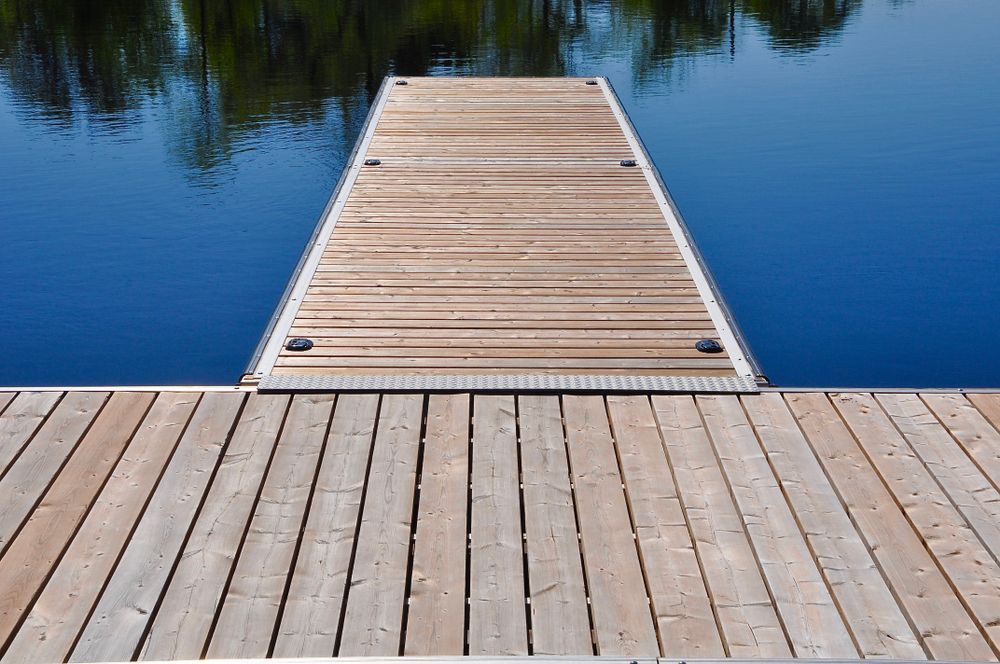
Construction planning addresses whether your property requires a stationary dock built on pilings, a floating dock that rises and falls with water levels, or a hybrid system combining both approaches for different functional zones. Stationary docks provide rigid platforms suitable for heavy equipment and boat lifts but require sufficient water depth year-round. Floating docks adjust to water level changes automatically, maintaining consistent height relative to boat waterlines, though they require secure anchoring to prevent drift during storms. Each approach offers specific advantages depending on typical water depth, bottom conditions, and how you use the dock beyond basic boat access.
After installation, you have dedicated space for each watercraft with appropriately positioned cleats that prevent lines from interfering with adjacent boats. Electrical outlets and water connections appear where needed for boat maintenance, cleaning, and battery charging without running extension cords across walkways. The dock remains accessible during water level conditions that previously made launching or retrieval difficult, and the walking surface stays stable without the flex or bounce that characterizes undersized or poorly anchored structures.
Docks frequently integrate with boat lifts, covered boat houses, or fish cleaning stations, requiring structural reinforcement and utility routing planned during initial construction. Adding these features later often requires partial disassembly and reinforcement that costs more than incorporating capacity during the original build phase.
Questions Property Owners Ask
Before committing to custom dock construction, waterfront property owners want clarity on design decisions and long-term considerations.
What slip dimensions work for different boat types?
Slip width should exceed boat beam by at least two feet on each side to allow fender clearance and line adjustment, while length extends beyond bow and stern by three to four feet, with specific dimensions varying based on whether you dock bow-in or parallel to the walkway.
How do floating docks stay positioned?
Pilings or anchoring systems secure the dock structure while allowing vertical movement along guide posts, with the anchoring method chosen based on bottom substrate and whether the location experiences current, wind, or boat wake forces that could shift an inadequately secured dock.
When does a dock need covered sections?
Covered slips or boat houses protect vessels from sun damage and weather exposure, extending gelcoat and canvas life while reducing maintenance frequency, though the added structure requires engineering for wind load and increased cost compared to open dock configurations.
What electrical and water systems are typically included?
Installations often include GFCI-protected outlets, dock lighting, and water spigots for washdowns, with all wiring run through conduit and all components rated for continuous moisture exposure typical of Houston and Corpus Christi marine environments.
Why do dock projects sometimes include seating or observation areas?
Extended platform sections create space for fishing, entertaining, or waterfront relaxation separate from active boat docking zones, with these areas designed for different loading than boat slips and positioned to avoid interfering with vessel maneuvering.
Third Coast Marine Construction tailors dock projects to your boat sizes, property shoreline characteristics, and how you use waterfront access beyond basic docking. Set up a site visit to review water depth, existing conditions, and features that would make the dock more functional for your specific boating activities.